When Perimenopause Begins Earlier Than Expected Before 40
Most women in their 30s have early perimenopause symptoms but wait decades to seek treatment.
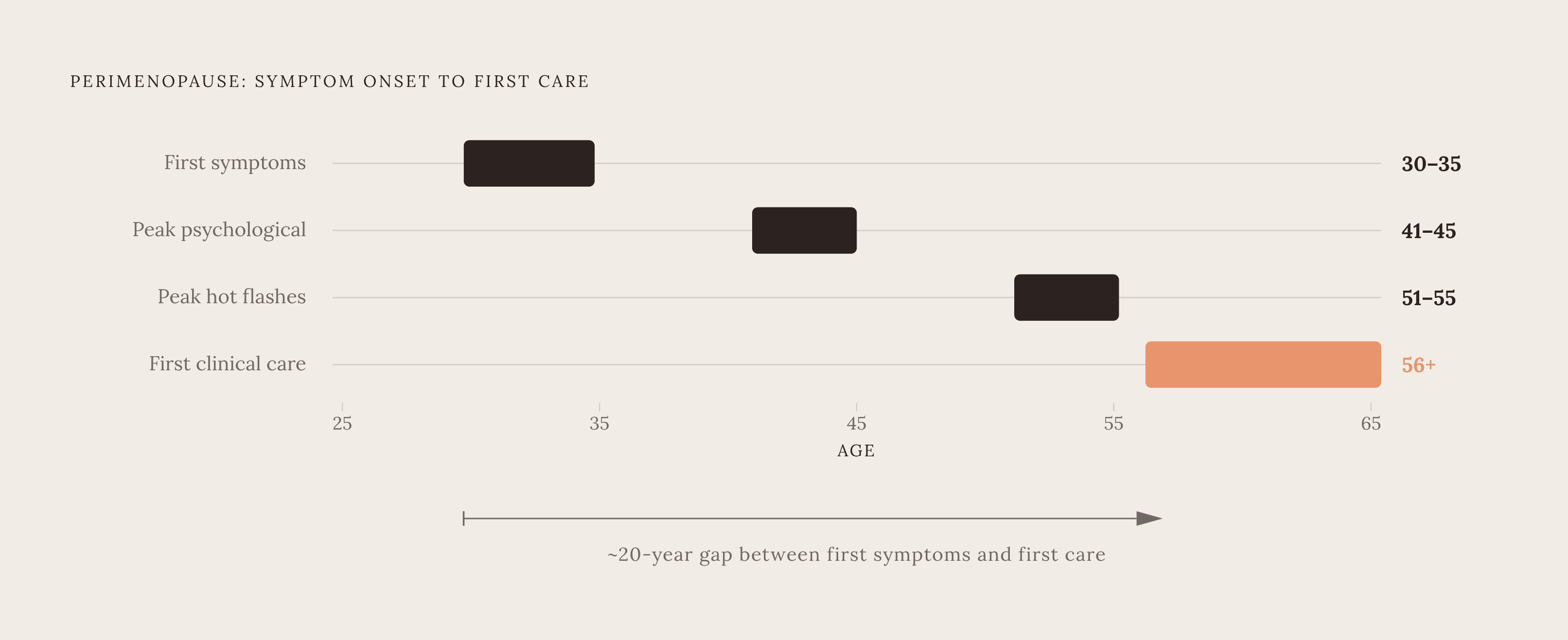
Most people, patients and physicians alike, place perimenopause somewhere in the late 40s, a few years of inconvenience before menopause officially arrives. That assumption does not hold up against the data. A study from UVA Health and Flo, published in npj Women's Health, found that a majority of women ages 30 to 35 reported moderate to severe perimenopause symptoms, and the proportion climbed higher still among women ages 36 to 40. Despite those symptom rates, most women in the 30 to 35 group had not sought care for them. Treatment-seeking did not become common until women reached 56 or older, a gap of roughly two decades between the first symptoms and the first clinical conversation about them. That gap exists because clinicians and patients are working from the same outdated map: neither one is primed to read anxiety, cycle changes, or disrupted sleep in a 33- or 37-year-old as the opening phase of a transition that is supposed to belong to someone else's decade.
What is actually happening in the body during early perimenopause
Early perimenopause is a stretch of hormonal volatility, and that volatility, more than any single number, is what defines the experience. Estradiol and progesterone do not decline in a straight line; they fall unevenly, so that one cycle might feel entirely ordinary while the next brings symptoms severe enough to disrupt work or sleep. That inconsistency is part of what makes the condition so hard for women to trust in themselves: how does anyone build confidence in a pattern that refuses to repeat?
The feedback loop between the brain and the ovaries drives this instability. As the ovaries become less responsive to follicle-stimulating hormone (FSH) and luteinizing hormone (LH), the signal they send back to the brain weakens and becomes less reliable. The pituitary compensates by releasing more FSH, so FSH levels tend to rise over the course of the transition, while estradiol swings unpredictably. This is not a contained reproductive event. The hypothalamic-pituitary-gonadal (HPG) axis and the hypothalamic-pituitary-adrenal (HPA) axis are intertwined, so shifts in estradiol and progesterone reach into the systems that regulate cortisol. That cross-talk helps explain why so many perimenopausal women describe a heightened stress response or a nervous system that feels less regulated than it used to, even on days when nothing in their lives has objectively changed. Progesterone, which has a natural sedative effect in the body, becomes especially erratic during this period and disrupts sleep, which is one reason sleep disturbance is one of the earliest complaints, well before anything resembling a hot flash.
How to tell early perimenopause apart from POI and other diagnoses that look similar
Early perimenopause and Primary Ovarian Insufficiency, known as POI, get discussed as if they were points on the same line, but they describe different physiology with different stakes. POI is the loss of ovarian function before age 40, a pattern closer to an absence of function altogether rather than the fluctuating, intermittent pattern seen in early perimenopause. It carries its own long-term risks, including elevated cardiovascular risk tied to prolonged estrogen deficiency. In early perimenopause, the ovaries are still working, just unreliably; periods may space out or become irregular, but function has not stopped. In POI, periods may become irregular or stop entirely, though they can sometimes return, and the hormonal profile behind that pattern differs from what appears in early perimenopause. Known drivers of POI include surgical removal of the ovaries, autoimmune disease such as thyroid disease, chromosomal abnormalities such as Turner syndrome, chemotherapy, and HIV, with family history and smoking adding further risk.
The differential does not stop there. Thyroid disorders, both hypothyroidism and hyperthyroidism, overlap extensively with perimenopause: fatigue, mood disturbances, weight changes, sleep difficulties, menstrual irregularities, and cognitive impairment can appear in either condition. The European Menopause and Andropause Society's 2024 position statement on thyroid disease and menopause advised practitioners to keep a low threshold of suspicion for thyroid disease whenever these symptoms appear, precisely because the two conditions are so easy to confuse at the level of presentation. Polycystic ovary syndrome (PCOS) complicates the picture further, since it can cause irregular or absent periods that look a great deal like the cycle changes of early perimenopause. The decade in question is also a window when autoimmune conditions commonly begin, so a single finding, hormonal or otherwise, should not be treated as the end of the investigation. A broad differential protects against the kind of premature closure that leaves the real driver of symptoms unaddressed for years.
Why Psychological Symptoms Arrive Before the Hot Flashes
The symptoms most associated with menopause in the public imagination, hot flashes and night sweats, are often the last to arrive, not the first. In early perimenopause, mood and cognitive symptoms, including anxiety, irritability, brain fog, and depression, typically appear well before vasomotor symptoms take hold. That sequencing is the primary reason early onset gets missed so often. The UVA Health and Flo study found psychological symptoms peaking in the 41 to 45 age range, well ahead of physical symptoms like vaginal dryness and bladder problems, which peaked equally in women aged 51 to 55 and those 56 and over. Hot flashes themselves did not peak until ages 51 to 55.
The connection between hormone variability and mood is not a loose metaphor. Estrogen helps regulate serotonin and dopamine, two of the brain's central mood and focus pathways, so when estrogen fluctuates, mood stability, concentration, and emotional regulation are affected through a direct neurochemical pathway. A woman in her late 30s who presents with anxiety, poor sleep, and trouble concentrating is far more likely to be evaluated first for a mental health condition or a thyroid disorder than for perimenopause, which rarely enters the conversation at that age. The same study's logistic regression analysis identified eight symptoms strongly associated with perimenopause, among them cycle irregularity, frequent urination, heart palpitations, period absence of twelve months or a notably shortened cycle, hot flashes, vaginal dryness, and pain on initial sexual penetration. Several of these symptoms get funneled toward entirely different specialties. Heart palpitations and joint stiffness, for instance, routinely send women toward cardiology or rheumatology, since estrogen's role in regulating heart rate and joint health means both symptoms can originate from hormonal variability. Why would a patient, or a physician for that matter, think to connect a racing heart to an ovary that is still years from quitting?
The Long-Term Health Stakes of Early Onset
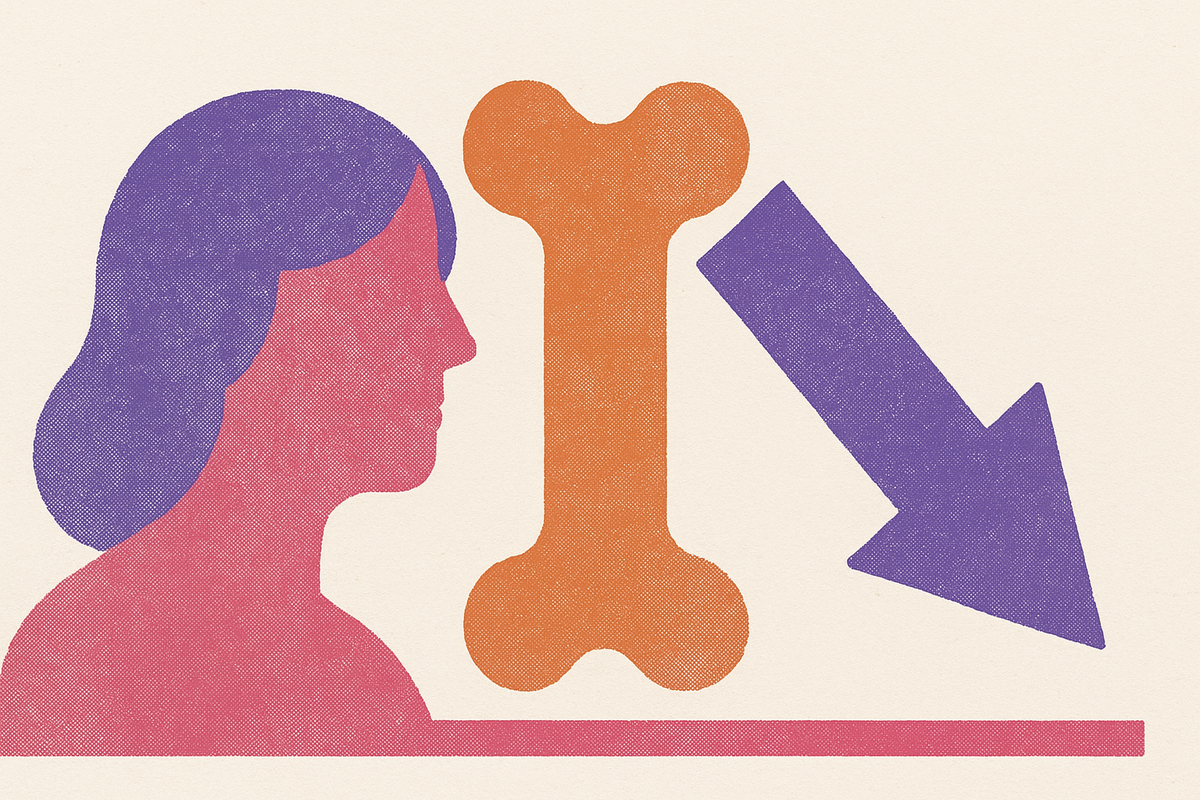
The consequences of early estrogen variability do not stop at discomfort. Estrogen offers a protective effect on the heart, bones, and brain, and when that protection begins to waver earlier than expected, the body loses it at an age the clinical system is not calibrated to notice, let alone treat. Bone health offers a clear example: accelerated bone loss begins during the perimenopausal transition itself, as erratic estradiol declines produce uncoupled bone remodeling, where the rate of resorption outpaces new bone formation. Clinical detection of this loss often comes too late for the most effective interventions, which makes the perimenopausal window, especially the early and often unlabeled part of it, a critical opportunity that the system is currently underusing.
Mental health carries its own long-term cost. Research tracking anxiety disorders among perimenopausal women projects a substantial rise in disability-adjusted life years attributable to anxiety by 2035, a trajectory that traces back to symptoms that went unaddressed from the start. Dr. Stephanie Faubion, MD, medical director of The Menopause Society, has described the core issue as "the early loss of estrogen, which helps promote heart, brain, and bone health," while a colleague added that "all of these things taken together in a few years before and after menopause lead to an environment that is less healthy for the heart." Read together, these points suggest a straightforward relationship: the earlier estrogen variability begins, the longer the window of exposure to its compounding risks. Early recognition is about shortening that window of exposure while there is still time to intervene.
How staging frameworks describe the transition, and where they fall short under 40
The two major frameworks used to stage the menopausal transition, STRAW and ReSTAGE, rely heavily on menstrual bleeding patterns to mark where a woman stands. Both frameworks use these patterns to distinguish late reproductive age, where FSH is normal and periods are unchanged, from early menopausal transition, marked by increased FSH alongside irregular cycles, and late menopausal transition, marked by a skipped period or a significantly prolonged cycle. The system works well for women whose cycles have already begun to shift noticeably. It works less well for a woman in her mid-30s whose cycles are only subtly different from what they used to be.
That woman's hormonal picture and her symptoms may both point toward perimenopause, yet the staging criteria may not place her in any recognized stage of the transition. Since perimenopause generally lasts several years, a woman experiencing symptoms at 35 could spend most of that window without a clinical label to describe what is happening to her. These frameworks were built to standardize research and clinical description, a genuinely useful purpose, but they were never meant to function as the sole diagnostic lens. In practice, though, a woman who does not yet meet the menstrual criteria is often told she is not perimenopausal, regardless of what her symptoms or her hormone levels suggest. That shortfall is exactly where testing becomes necessary, not as a replacement for staging, but as a complement to it.
What Hormone Testing Can and Cannot Tell You
Hormone testing offers real value in understanding perimenopause, but every major marker fluctuates enough during this transition that one blood draw can distort the picture as easily as it can clarify it. FSH illustrates the problem well: as the ovaries respond less reliably, the pituitary compensates by releasing more FSH, and elevated FSH can indicate perimenopause or menopause. But FSH fluctuates naturally from month to month, so a single elevated reading does not carry much diagnostic weight on its own. Levels that stay elevated across repeated measurements are what matter.
Estradiol tells a similar story. High FSH paired with low estradiol is consistent with an advancing menopausal transition, yet estradiol fluctuates considerably during perimenopause, so one low reading mainly reflects where a woman happens to be in her cycle. The form most relevant here, 17β-estradiol, is the most biologically active form of estrogen, and its variability drives symptoms like hot flashes, night sweats, and disrupted sleep. LH adds another layer: its secretion becomes irregular and elevated during perimenopause, with occasional surges, and while chronically elevated LH is more a marker of menopause than perimenopause, tracking how it moves over time still adds useful context. Anti-Müllerian Hormone, or AMH, rounds out a fuller panel; it can help predict when menopause may begin or help identify causes of early menopause, making it a valuable addition when the goal is to understand ovarian reserve alongside the rest of the hormonal picture.
The throughline across all four markers is the same: perimenopause is a protracted, moving process, so tracking the same markers over time reveals patterns that no single snapshot can<sup>7</sup>. Longitudinal measurement is where the clinical picture actually becomes informative, letting a woman see her own trends, connect her symptoms to the hormonal shifts producing them, and make better-informed decisions about her health, lifestyle, and treatment options going forward.
How the healthcare system consistently fails younger women seeking perimenopause answers
The gaps described throughout this piece are not a string of individual bad outcomes. They point to a systemic deficit in medical training, in proactive screening, and in clinical curiosity about symptoms that arrive earlier than expected. Younger women face a steeper barrier than their older counterparts. Among Millennial women ages 30 to 44, 46 percent were not proactively asked by their providers whether they had experienced perimenopause symptoms, compared with 29 percent of Gen X women ages 45 to 60. The information gap runs just as wide: only 18 percent of Millennial women learned about perimenopause from a primary care provider or OB/GYN, compared with 41 percent of Gen X women. More than half of women surveyed, 52 percent, said their healthcare provider never suggested a blood test of their hormone levels.
One might ask how a condition affecting such a large share of women in their 30s could go so consistently unaddressed at the point of care. Part of the answer sits in training: fewer than a third of U.S. OB/GYN residency programs include any menopause curriculum whatsoever. If the physicians most likely to encounter these symptoms are not reliably taught to recognize them in a patient under 40, the burden of making the connection falls back onto the patient herself, often years after the first symptom appeared. That burden falls unevenly across patients despite being largely avoidable. Closing it will require medical education, screening practices, and testing protocols that catch up to what studies like the UVA Health and Flo research have already made clear: perimenopause, for a meaningful share of women, begins well before the age anyone has been trained to expect it.
Sources
- Methods of diagnosing early-onset menopause
- Steroid Hormone Secretion Over the Course of the Perimenopause: Findings From the Swiss Perimenopause Study
- Effect of progesterone sequential therapy on follicle stimulating hormone (FSH), luteinizing hormone (LH), and estradiol (E2) in perimenopausal dysfunctional uterine bleeding