How Perimenopause Is Discussed and Diagnosed Differently Across Cultures
Cultural and racial differences shape how perimenopause gets recognized and treated worldwide.
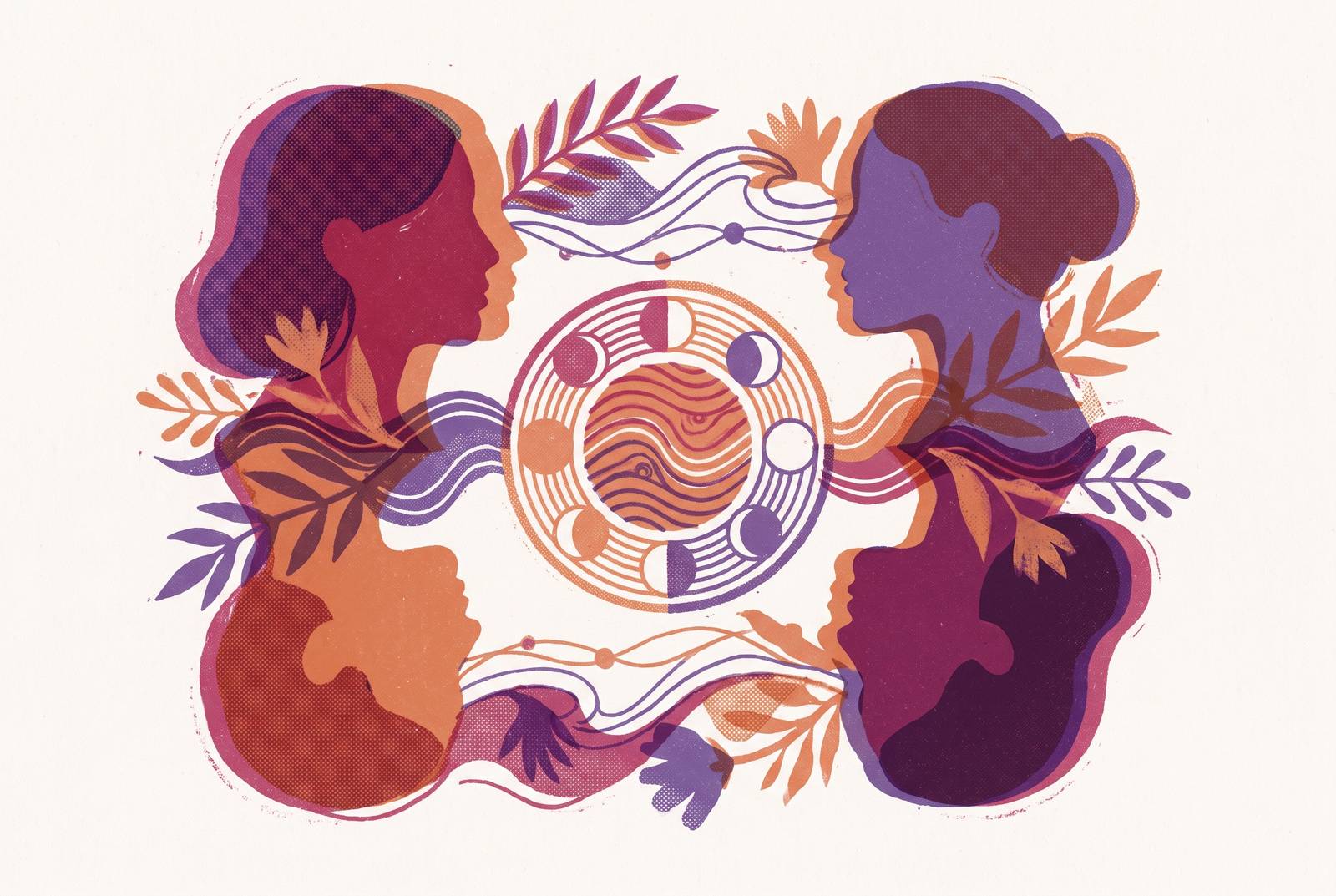
Perimenopause is one of the most biologically consistent transitions a human body goes through: every woman who lives past midlife experiences declining estradiol and progesterone, rising FSH, and ovulation that grows steadily less predictable. What varies, sharply and measurably, is how that transition gets felt, named, and treated depending on where a woman lives, what she has been taught to notice, and who is listening when she describes it.
Why the same biological transition produces different symptom experiences worldwide
The clinical world has largely agreed on how to define the start of this transition. Researchers and clinicians use the STRAW+10 framework as the standard staging system, and it marks early perimenopause mainly through menstrual cycle changes: if a woman's cycle shifts seven days or more from her usual length, that counts as an early warning sign. That gives doctors everywhere a common vocabulary, but it also assumes the body announces itself the same way across populations, and the data say it doesn't. A systematic review covering 66 papers from every inhabited continent found vasomotor symptom rates that ranged from a small minority of women to an overwhelming majority, and hormone biology alone can't explain a spread that wide. Language, culture, social expectation, access to care, and what a woman has learned to pay attention to in her own body all shape what counts as a symptom worth reporting. This variation matters beyond academic curiosity, because it points directly at the gaps in how perimenopause gets recognized and treated in clinics around the world.
What women across cultures recognize versus what they experience
Across countries, what women believe they should expect from perimenopause and what they actually feel during it line up poorly, and the mismatch runs in one direction consistently: textbook symptoms dominate public awareness while the symptoms women actually live with go unnamed. A study using data from the mobile health app Flo looked at women aged 35 and older and found their most frequently self-reported symptoms were fatigue, physical and mental exhaustion, irritability, depressive mood, sleep problems, digestive issues, and anxiety. None of those are the hot flashes and night sweats that dominate public health messaging. They're diffuse, hard to pin down, and easy to blame on something else entirely: stress, overwork, a bad week. The same study found that symptom knowledge and symptom experience varied significantly by region, so this isn't a scattering of individual blind spots; it's a pattern built into how different populations learn about the transition in the first place. The practical fallout is straightforward: a woman who never gets hot flashes may never connect her fatigue or her stomach trouble to perimenopause at all, and a clinician working from a hot-flash-first checklist will miss her too. Dr. Stephanie Faubion of The Menopause Society, a co-author of the study, said that understanding these varied experiences is essential for educating both women and healthcare professionals worldwide. That statement frames the whole problem: the gap isn't a failure of individual attention, it's a failure of what gets taught as the default picture of perimenopause.
Why hot flashes are not a universal marker
The mismatch between knowledge and experience doesn't scatter at random. It tracks geography closely enough to question whether hot flashes deserve their status as the defining sign of perimenopause. Hot flash prevalence runs high in Europe and the United States and considerably lower in Japan, a gap that undercuts the idea, built into most Western symptom checklists, that vasomotor symptoms are the universal tell. Psychiatric research on depression documents a similar tendency: studies find somatic symptom expression, meaning physical complaints like fatigue or pain, in East Asian contexts, against psychological symptom expression, meaning descriptions of mood and emotion, in Western ones. That distinction wasn't established specifically for perimenopause, but it almost certainly shapes how perimenopausal mood changes and body changes get described to clinicians in different parts of the world. One might ask: if a woman in one country is more likely to describe her perimenopause as joint pain and digestive trouble, while a woman in another describes the same transition as anxiety and low mood, how many of these cases does a single symptom checklist actually catch? A clinician trained strictly on a Western list, built around hot flashes and mood disturbance as the headline markers, will systematically underidentify perimenopause in women whose primary complaints run through fatigue, joint pain, digestive disruption, or mood changes.
How race shapes symptom burden and duration
The variation doesn't stop at national borders. Within a single country, holding geography constant, race and ethnicity still predict real differences in symptom severity, duration, and the age at which the transition even begins. A major longitudinal study of women's health, known as SWAN, is a 30-year study longitudinal study and the main evidence base on ethnic disparities in menopause. SWAN found that Black and Hispanic women reach menopause measurably earlier than white women, and that frequent, bothersome vasomotor symptoms occur 60% more often in Black women than in white women. Duration tells a similar story. SWAN data cited in 2026 show Black women carry the longest median vasomotor symptom duration of any group studied, more than a decade, while non-Hispanic white women and Japanese women have shorter durations. The Mayo Clinic has noted that Black people report hot flashes more often than people of other races, while Asian people report them least often, a pattern that holds even within the same healthcare system seeing the same clinicians. Is this purely biological, or not? SWAN researchers and others trace part of the racial disparity in symptom burden to structural stressors, socioeconomic conditions, and the cumulative physiological toll of living with ongoing inequity, so the disparity is both biological and social at once. That combination sets up the next question directly: if Black women carry the heaviest and longest symptom burden in the U.S. data, does the healthcare system respond to that burden with more treatment, or less?
Why greater symptom burden does not bring Black and minority women more or better care
Less, by a wide margin. A study presented at the ACOG Annual Clinical & Scientific Meeting looked at more than 1.8 million patients and found hormone replacement therapy use highest among non-Hispanic white patients and lowest among Asian and Black patients, the same groups carrying some of the heaviest symptom loads. Black patients were more likely to be prescribed SSRIs, fezolinetant, or gabapentin, medications that treat individual symptoms while leaving the hormonal transition driving them unaddressed. The pattern repeats outside the U.S.: UK data show Black and minoritized women use HRT at roughly half the rate of Caucasian women, and a substantially higher share of Black women receive a late diagnosis of menopause compared to Caucasian women. Claims data add another layer, showing that Black, Hispanic, and Asian women are more likely than white women to discontinue vasomotor symptom treatment once started, and that lower income independently predicts higher discontinuation regardless of race, tying race, class, and access to care into a single, measurable pattern. The 2026 analysis traces these disparities to structural racism, socioeconomic inequity, healthcare system failures, and cultural differences, not to individual preference or to lower symptom severity among the patients receiving less care. The data leave little room to read this as a coincidence of patient choice.
Why current diagnostic tools fail across all these contexts
Everything traced so far, the cross-national variation, the racial disparities, the gap between symptom awareness and lived experience, runs through the same diagnostic infrastructure. The standard toolkit for identifying perimenopause relies on cycle irregularity and single-point FSH testing, and both were built on a narrow evidence base that strains under the weight of what's now known about how differently this transition presents. STRAW+10 defines early perimenopause mainly through menstrual cycle changes, but a Monash University-led study published in The Lancet Diabetes & Endocrinology in 2025 found that classic symptoms, particularly vasomotor symptoms and vaginal dryness, show up in women who still have regular cycles but have noticed changed menstrual flow, heavier or lighter periods, placing them physiologically in early perimenopause before their cycles meet the irregularity threshold STRAW+10 requires. This matters because it means the framework's own trigger point arrives too late for a meaningful share of women already in transition. FSH testing adds a second layer of trouble: FSH fluctuates substantially during perimenopause, so a single blood draw can come back entirely normal even while the transition is well underway, and that normal result is routinely used to wave symptoms away. NICE guidelines state that FSH testing is not required to diagnose perimenopause in women over 45 with typical symptoms, and the 2025 European Society of Endocrinology clinical guideline goes further, stating that biochemical testing for diagnosing or managing perimenopause or menopause in women older than 45 is not necessary. Despite that guidance, single-test dismissal remains common in practice. Structural barriers compound the gap in some health systems more than others: in China, perimenopausal care runs through the outpatient clinics of public hospitals, mostly internal medicine and gynecology departments. That means repeated visits, missed diagnoses, and misclassification multiply whatever limitations the diagnostic tools already carry. None of this is a story about individual clinicians failing to do their jobs carefully. It's a story about a framework, built around cycle timing and a single hormone test, that gets applied in settings where both measures miss a meaningful share of the women going through the transition.
How misdiagnosis compounds when symptoms are attributed to anxiety, depression, or other conditions
When the diagnostic framework misses perimenopause, the symptoms get treated as something else, which delays the right care and reinforces the idea that what a woman is experiencing is psychological. Survey data found a significant share of respondents had been diagnosed with and treated for anxiety, depression, mood swings, or panic attacks, conditions perimenopause can directly cause or closely mimic. The overlap appears inside standard screening tools. Seven of the eight conditions on the PHQ-8 depression screening scale, including sleep disruption, appetite changes, fatigue, trouble concentrating, and mood disturbance, can be caused by perimenopause or menopause rather than clinical depression, and a positive screen on its own cannot tell the two apart. Thyroid disorders and polycystic ovary syndrome complicate the picture further: PCOS can produce cycle irregularity that looks identical to the early markers of perimenopause, and thyroid dysfunction overlaps heavily with the fatigue, mood changes, and weight shifts that show up in both conditions. The silence around the topic in clinical settings makes all of this harder to catch early. Survey data show fewer than half of patients had a primary care provider or OB-GYN raise the subject of perimenopause symptoms first, and many women said they were never told how severe symptoms could get, what the mental health impact might look like, or how to advocate for themselves in an appointment. And because the earlier pattern of somatic versus psychological symptom framing varies by culture, the specific wrong diagnosis a woman receives, anxiety here, a vague fatigue workup there, may itself shift depending on where she lives and what her clinician has been trained to listen for.
Why a single culture's symptom checklist is structurally inadequate
Every section up to this point traces back to the same structural flaw. A checklist built from one population's most visible symptoms, hot flashes and night sweats drawn largely from data concentrated in a handful of similar industrialized nations, cannot account for the fatigue-and-digestive-symptom profile common among other groups, the somatic symptom framing documented in East Asian psychiatric research, or the racial disparities in symptom duration and severity measured inside a single healthcare system by SWAN. A tool that misses women on the basis of geography will also miss them on the basis of race, income, and the specific clinical culture that trained their doctor, because all of these forces load onto the same narrow set of questions a checklist asks. The Monash findings show symptoms can precede the cycle changes STRAW+10 requires; the SWAN data show the same symptom can last over a decade in one racial group and far less in another; and the ACOG data show that even when symptoms are acknowledged, treatment doesn't follow evenly. None of these are separate problems needing separate fixes. They are different measurements of the same underlying mismatch between a universal biological transition and a diagnostic language built from a fraction of the women living through it.
Sources
- International Differences Exist in Knowledge Gaps and Most Common Perimenopause Symptoms
- Towards a more accurate global picture of perimenopause
- Somatic in the East, Psychological in the West?: Investigating Clinically-Grounded Cross-Cultural Depression Symptom Expression in LLMs
- Global perspectives on perimenopause: a digital survey of knowledge and symptoms using the Flo application