HRT Candidacy Criteria for Perimenopausal Women
Doctors evaluate multiple factors beyond symptoms to determine if HRT is right.

Perimenopause is not a brief prelude to menopause. It is a biologically distinct transition that can span years and carries its own physiology, symptom profile, and clinical logic. HRT candidacy during this window is determined not by any single test or symptom, but by a constellation of factors that includes symptom severity, stage of transition, uterine status, and health history. Understanding those criteria changes what a woman can bring to the conversation with her clinician.
Why perimenopause creates a specific window for HRT consideration
Perimenopause is the transition that produces the symptom burden driving most HRT conversations, and it is precisely why candidacy criteria are calibrated to this stage rather than to menopause itself. The transition begins years before the final menstrual period, typically in a woman's 40s, as ovarian production of estrogen and progesterone declines. That decline, however, is not a steady downward slope. It is erratic, uneven, and biologically active in ways that a simple countdown to menopause would not capture.
The STRAW staging framework gives clinical structure to what would otherwise feel like an undifferentiated stretch of years. Early perimenopause is defined by persistent variation of seven or more days in consecutive cycle lengths. Late perimenopause, designated STRAW Stage −1, is marked by extended amenorrhea and typically lasts one to three years before the final menstrual period. These distinctions are not academic. Stage affects how HRT candidacy is evaluated, how the risk-benefit calculation shifts, and how hormone test results should be interpreted.
Cleveland Clinic notes that perimenopause may begin as early as the mid-30s, with an average length around four years. Some women remain in transition for up to eight. That duration matters because the window for intervention is not indefinite. The clinical question is not simply whether a woman experiences symptoms, but where she sits within a transition whose phases carry meaningfully different implications for treatment.
How does a woman know if she is in perimenopause, and what should she expect?
The symptom profile of perimenopause is broad enough to affect nearly every system, and severe enough in a substantial share of women that watchful waiting is not a neutral choice. The symptoms documented by Cleveland Clinic and UC Davis Health span vasomotor, genitourinary, psychological, and cognitive domains. Hot flashes, night sweats, vaginal dryness, urinary urgency, sleep disruption, mood changes, anxiety, brain fog, and low libido all appear in the clinical picture. A woman in her 40s asking why she is suddenly waking drenched in sweat or struggling to recall a word is not imagining things. She is describing a transition with measurable physiological drivers.
The burden is not confined to women in their late 40s. A 2025 study in npj Women's Health that surveyed 4,432 U.S. women found significant symptom burden and healthcare-seeking behavior even among those aged 30 to 45. That finding complicates the cultural assumption that perimenopause is a late-40s phenomenon. It suggests that the transition can begin earlier than many women and their providers expect, which has consequences for how readily symptoms are recognized for what they are.
The downstream structural risks matter as much as the day-to-day symptoms. Postmenopause brings elevated risk of osteoporosis and heart disease from sustained low estrogen, as UC Davis Health notes. They develop during the transition itself. This structural dimension means the HRT candidacy question is not solely about symptom relief. It is about whether intervention during the transition window can meaningfully reduce long-term risk, which is a qualitatively different clinical question than asking whether a woman can tolerate her hot flashes.
That raises an important objection worth addressing directly. Some women experience mild symptoms and wonder whether HRT is relevant to them at all. The candidacy criteria answer that question with a threshold, not a blanket rule. Moderate-to-severe symptom burden is the standard that triggers consideration. Knowing where one falls on that spectrum is itself a useful form of clarity.
The positive criteria that make a woman a candidate for HRT
HRT candidacy rests on a cluster of positive criteria that must be evaluated together rather than checked off in isolation. The framework is not a self-administered checklist. It is a set of factors a woman can use to ask precise questions and evaluate the answers she receives from a clinician.
Symptom severity is the primary clinical driver. Moderate-to-severe vasomotor symptoms, meaning hot flashes and night sweats, are the most established positive indication. Genitourinary symptoms such as vaginal dryness and urinary urgency are also recognized positive indications, particularly when they affect sexual function or daily comfort. The operative word is severity, not mere presence. A woman who occasionally feels warm at night is in a different clinical category than one whose sleep is repeatedly disrupted and whose work performance suffers.
Timing within the transition is a second essential criterion. Being under age 60 or within 10 years of menopause onset is the standard eligibility threshold, and it appears in candidacy protocols for a reason. The window is real, and it is not open indefinitely.
Uterine status directly determines which HRT regimen applies. A woman with an intact uterus requires combined estrogen plus progestogen to protect the endometrium from unopposed estrogen stimulation. This distinction is not a nuance. It changes the entire treatment plan and the associated risk profile, which is why a candidacy conversation should address it explicitly.
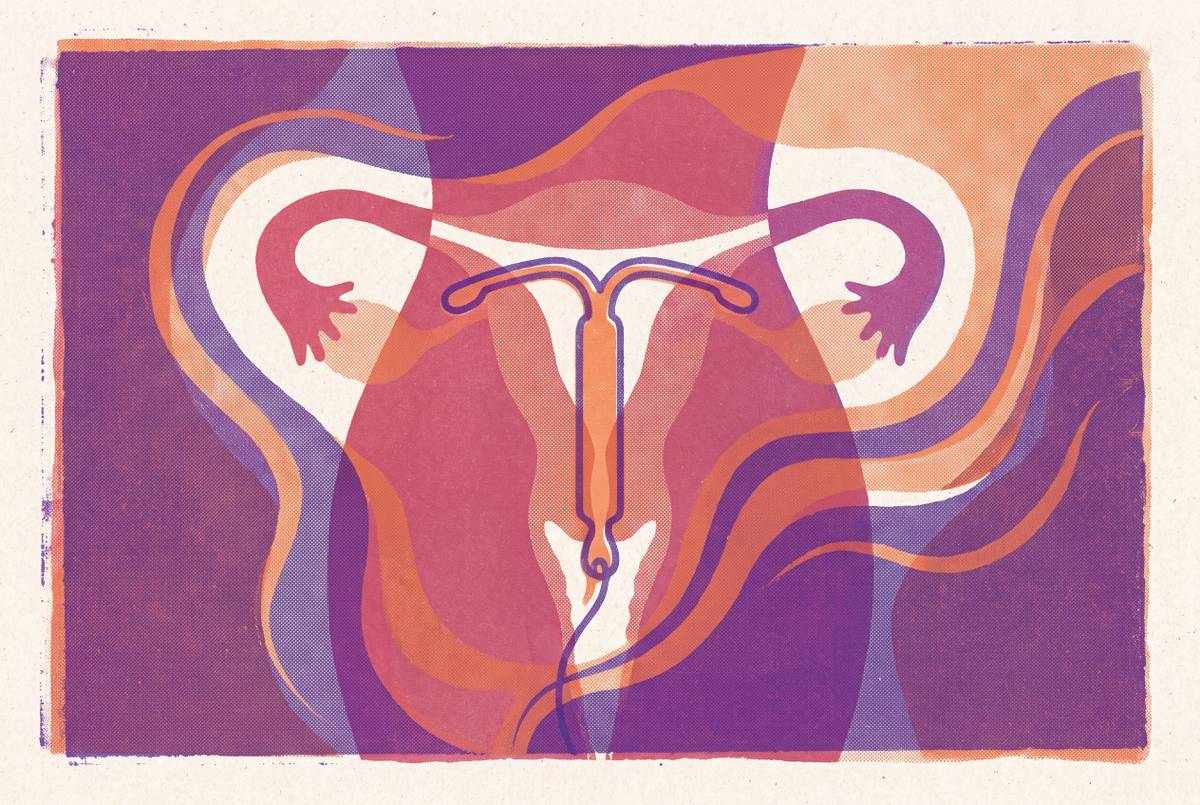
Route of administration carries its own clinical logic. HRT can be delivered as pills, patches, IUDs, gels, suppositories, and more, as UC Davis Health outlines. Transdermal estrogen carries a lower blood clot risk than oral estrogen, which means route is not an administrative preference. Because symptom severity, timing, and hormonal context all converge in candidacy decisions, women benefit from arriving at the conversation with concrete data about where they are in the transition and how their hormone levels have shifted. A curated blood panel interpreted by a clinician can ground those conversations in objective markers rather than assumptions, helping both patient and provider calibrate the discussion to the individual's actual profile.
The contraindications that change or preclude HRT candidacy
Candidacy for HRT is not only a matter of qualifying. Certain health histories are absolute or conditional barriers that redirect the clinical conversation toward alternatives. Understanding these barriers helps a woman comprehend what her provider is assessing, which is a different project than performing a risk assessment on herself.
Active or recent hormone-receptor positive breast cancer is a contraindication that rules out systemic HRT regardless of symptom burden. Prior venous thromboembolism or active blood clots similarly preclude systemic treatment. Severe liver disease falls into the same category. Prior stroke or transient ischemic attack is a strong contraindication, though guidelines recommend specialist referral and shared decision-making rather than an absolute rule in all cases. Established coronary artery disease sits in a conditional category, requiring specialist review rather than automatic exclusion.
But how does this affect the original promise of candidacy as a framework rather than a gate? They make it more specific. The clinical terrain is more textured than a simple yes or no.
One misconception deserves explicit attention. Women with a family history of breast cancer, meaning no personal diagnosis, are sometimes told they cannot consider HRT. The actual clinical evaluation depends on personal history, not family history alone. This is exactly the kind of nuance worth bringing explicitly to a provider, because the distinction between inherited risk and personal contraindication is clinically significant and frequently misunderstood.
Why hormone testing alone cannot confirm candidacy, and what it can usefully tell you
A single hormone test result is an unreliable basis for HRT candidacy decisions during perimenopause because the very nature of the transition makes snapshot data misleading. The most commonly ordered test is FSH, and it fluctuates significantly across the perimenopausal years. A single normal result does not rule it out.
The biology behind this is specific. Estrogen can temporarily suppress FSH back toward normal levels even during active perimenopause. One might argue that any test result is better than none, but in this context a misleading result can be worse than no result because it can close down a conversation that should remain open.
What hormone testing can contribute, done well, is pattern rather than snapshot. FSH helps distinguish perimenopausal status, particularly in women who have had a hysterectomy with ovaries intact, where menstrual cycle cues are absent. Consistently elevated levels over time carry more diagnostic weight than any individual reading.
Longitudinal tracking is not merely preferable. It is the methodologically correct approach. Because perimenopause is a protracted process of interrelated hormonal changes, cross-sectional snapshots can systematically mislead about where a woman actually is in her transition. Tracking estradiol, progesterone, and FSH over time reveals the trajectory that single measurements cannot capture. Intermission Health's testing model is designed around this structural reality: a curated blood panel reviewed by a clinician and tracked over time produces the kind of longitudinal hormonal picture that supports informed conversations with providers, rather than a single number delivered without context.
How misdiagnosis and provider gaps undermine HRT access before the candidacy conversation begins
The candidacy framework only helps women who make it into a conversation where perimenopause is actually on the table, and the healthcare system routinely fails to put it there. Perimenopause symptoms overlap extensively with other diagnoses that providers reach for first. Anxiety, depression, mood disorders, and panic attacks are common primary diagnoses given to women who are actually experiencing hormonal fluctuation. The woman receives a prescription that addresses a diagnosis rather than the underlying transition.
Provider training gaps compound the diagnostic problem. A large share of OB-GYN residents report receiving little or no formal training in menopause management. Women frequently report feeling dismissed when they raise perimenopausal symptoms at first presentation, and the dismissal is not always callousness. It can be the product of a clinician who was never taught to recognize the pattern.
The regulatory environment has shifted in ways that ought to help. That warning label had shaped prescribing caution for decades, and its removal clears the way for clinicians and patients to evaluate HRT without a label that had become clinically outdated. Coverage is expanding but inconsistently, and cost remains a documented barrier to treatment for a meaningful share of women.
The point here is not that the system is broken beyond repair. The criteria exist. And the difference between a woman who knows what to ask and one who does not is often the difference between being heard and being sent home with a prescription for something else.
How to use candidacy criteria to have a more productive clinical conversation
Understanding the candidacy criteria converts a passive patient into an active participant in a clinical decision that directly concerns her body and her health trajectory. The shift is practical, not rhetorical. It changes what a woman says in the first five minutes of an appointment and what she is equipped to hear in response.
A well-prepared woman can bring a clear account of symptom severity and functional impact. Her health history as it relates to contraindications, specifically personal rather than family history of hormone-sensitive cancers, cardiovascular events, or clotting disorders, anchors the risk discussion. Any prior hormone test results, especially if tracked over time, with dates and context, supply evidence rather than anecdote.
Questions worth asking a provider directly follow from the framework. Whether symptom severity and timing qualify her for the HRT candidacy window. Which regimen and route of administration would apply given her uterine status and health history. What hormone testing, if any, would help clarify her stage of transition and inform the decision. How her risk profile specifically interacts with the known contraindications, not as a category but for her.
Longitudinal hormone data is among the most useful things a woman can bring to this conversation. A tracked panel showing FSH, estradiol, and progesterone across multiple time points gives a clinician pattern-level evidence rather than a single ambiguous data point. Intermission Health's testing model, a curated blood panel with clinician review and longitudinal tracking, is designed for exactly this purpose: producing the kind of evidence that makes a candidacy conversation specific rather than generic.
The criteria exist, the framework is learnable, and knowing it is an act of self-advocacy. It is not a workaround for a broken system, but a tool that has always been available to those who knew where to look. She walks in with a question her provider can actually answer.