Mirena IUD Use During the Perimenopause Transition
Mirena suppresses the bleeding signals that normally mark the perimenopausal transition.
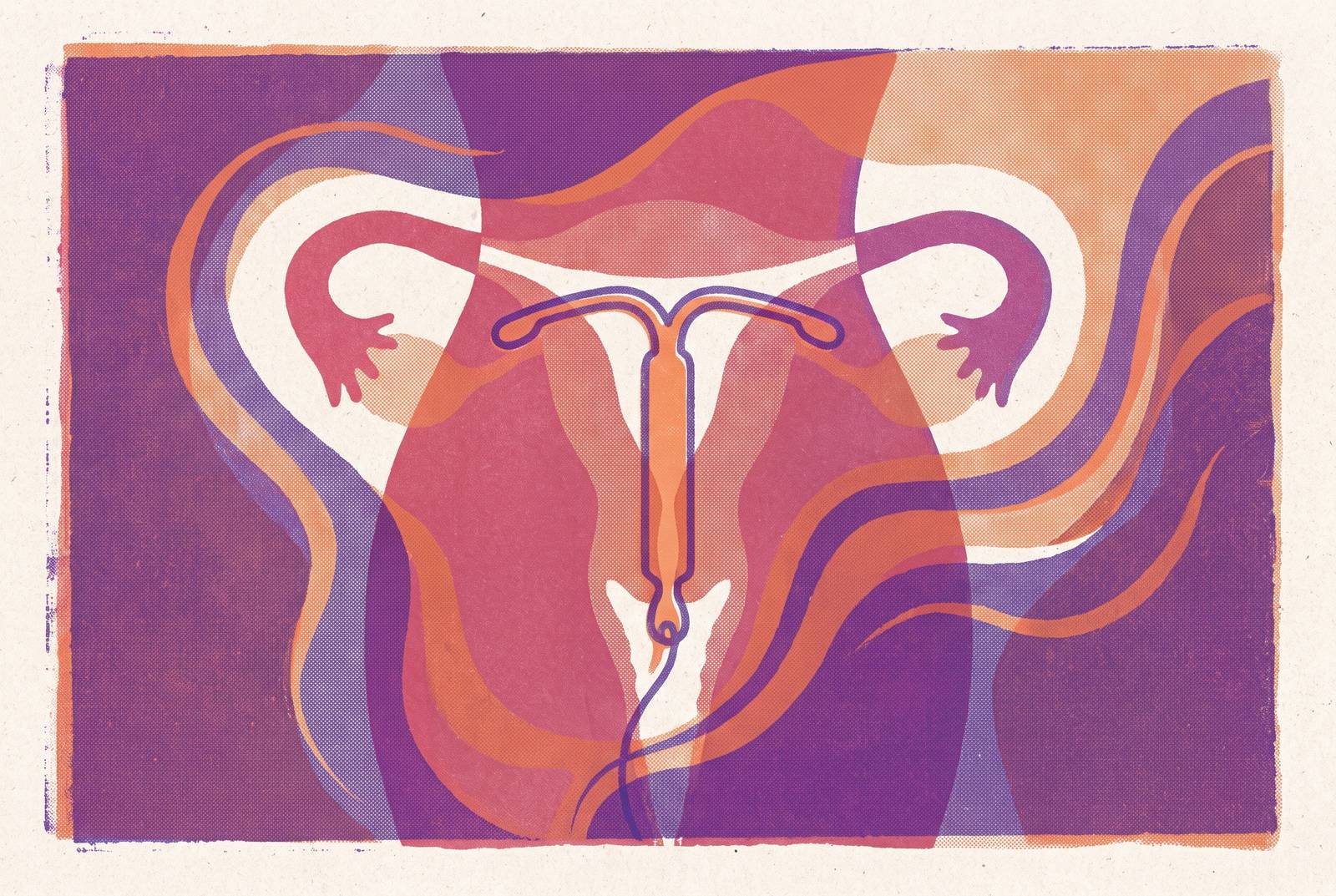
Mirena, the levonorgestrel-releasing intrauterine device, is widely used during perimenopause to manage heavy, erratic bleeding and to provide endometrial protection when estrogen therapy is added for hot flashes and night sweats. But the same mechanism that makes it useful, the suppression of menstrual bleeding, removes the main signal women and clinicians use to track where someone actually is in the transition. This piece walks through what perimenopause does to the uterus, what Mirena does and doesn't do, where the evidence for its benefits comes from, and what has to replace the bleeding pattern once Mirena takes it away.
What perimenopause does to the uterus, and why bleeding becomes erratic
Most women notice perimenopause the same way: periods that used to show up like clockwork start arriving early, late, heavier, lighter, or not at all for a stretch. That unpredictability is not random. It traces back to a specific hormonal sequence, and understanding it is the only way to evaluate what a device like Mirena is actually doing inside the body.
Progesterone falls before estrogen does. That ordering is the direct cause of abnormal uterine bleeding in early perimenopause. The corpus luteum, the temporary structure that forms after ovulation and produces progesterone during the second half of the cycle, starts to weaken first. Ovulation may still happen regularly, but the luteal phase produces less progesterone than it used to, and estrogen is left comparatively unopposed. Yu et al. (2022) describe the mechanism this way: ovarian sensitivity to gonadotropins declines, progesterone secretion falls, and an endometrium stimulated by estrogen without adequate progesterone conversion to secretory phase becomes prone to irregular cycles, heavy flow, prolonged bleeding, and secondary anemia. The body responds to the faltering ovarian signal by raising FSH and LH, but estrogen itself does not necessarily drop in early perimenopause. It can stay normal or even run high for a period before its sustained decline begins in late perimenopause.
This is why cycle change functions as the first visible marker of the transition. Clinically, early perimenopause (Stage -2 in the standard staging framework) is defined by cycle-length variability of seven days or more, and late perimenopause (Stage -1) is flagged by a gap of two months or more without a period. Menstrual pattern is the primary chronological tool clinicians and women use to locate themselves in this process. That dependence on bleeding pattern matters enormously once a device enters the picture that alters bleeding on its own terms, which is the exact situation Mirena creates.
What Mirena does inside the uterus
Mirena is a local progestogen delivery system, not a systemic hormone therapy, and that distinction shapes everything about how it interacts with perimenopause. The device releases 20 micrograms of levonorgestrel daily directly into the uterine cavity. Only a small fraction of that dose reaches systemic circulation, so the hormonal fluctuations actually driving perimenopause, the ovarian output of estrogen and progesterone, continue largely undisturbed.
That local action is the hinge the entire argument for using Mirena in perimenopause rests on. The device counters the endometrial consequences of progesterone deficiency, thickening and irregular shedding, without replacing or substantially altering the hormones the ovaries are producing. Because ovarian activity carries on, estrogen, FSH, and LH keep fluctuating the way they would without the device in place. Vasomotor symptoms like hot flashes, night sweats, and disrupted sleep are driven by those systemic fluctuations, so Mirena alone does nothing to relieve them. And the device doesn't shift the underlying timeline of ovarian aging: follicle depletion proceeds on its own schedule, and Mirena neither delays nor hastens the arrival of menopause itself.
The two concrete problems Mirena solves during the transition
Within that narrow, local scope, Mirena solves two specific problems that matter a great deal to women moving through perimenopause: the heavy, erratic bleeding caused by progesterone deficiency, and the endometrial cancer risk that arises when systemic estrogen is added to a regimen without a progestogen to balance it.
On the bleeding evidence, the strongest comes from a randomized controlled trial by Yu et al. (2022), which compared Mirena against medroxyprogesterone in 80 perimenopausal women with abnormal uterine bleeding over three months. The Mirena group achieved a higher effective rate at three months, and both endometrial thickness and menstrual volume scores were significantly lower than baseline and lower than the medroxyprogesterone control group. Hemoglobin levels in the Mirena group improved significantly as well, reflecting genuine correction of blood-loss anemia. Quality of life scores, measured using the WHOQOL-BREF instrument, were also higher in the Mirena group at three months than in the comparison group.
The second problem Mirena solves concerns women who add estrogen therapy to manage vasomotor symptoms. Unopposed estrogen in a woman who still has a uterus raises endometrial cancer risk substantially. Any systemic estrogen regimen requires a progestogen to protect the endometrium. Mirena can supply that progestogen locally. A woman can add transdermal or oral estrogen for hot flashes and sleep disruption without needing a separate oral progestin tablet. In one country, a national sexual and reproductive healthcare professional body supports using any 52 mg levonorgestrel-releasing IUD for up to five years for endometrial protection as part of hormone replacement therapy, though this is off-label use beyond Mirena's own four-year licensed indication for that purpose; national clinical guidelines align with this position, and a menopause specialty society's clinical guidance confirms the approach for clinicians. In another country, this combination is used off-label as well: Mirena's approved labeling there covers contraception and treatment of heavy menstrual bleeding, not hormone replacement therapy, and that distinction is worth raising directly with a clinician before assuming the two uses are interchangeable.
Why Mirena's biggest practical advantage, stopping periods, is also its central complication
Mirena's effectiveness at controlling bleeding creates a problem that has nothing to do with side effects or safety and everything to do with information. By suppressing or eliminating menstrual bleeding, the device removes the primary marker women and clinicians rely on to figure out where someone stands in the perimenopausal transition. That is a practical tracking problem, not a theoretical one.
Menopause itself is defined clinically as 12 consecutive months without a period. That clock simply cannot start if periods are already absent because of the device sitting in the uterus. The formal staging system used to locate women in the transition, known as STRAW+10, treats menstrual pattern as its central criterion: late perimenopause (Stage -1) is defined by 60 or more days without a period, and postmenopause begins after 12 months of amenorrhea. Neither threshold can be assessed from bleeding pattern in a woman using Mirena, because her bleeding pattern has already been altered by the device rather than by her own declining ovarian function.
Vasomotor symptoms still happen independently of Mirena, since they're driven by systemic hormone fluctuation rather than anything happening locally in the uterus, and they remain a genuinely useful signal. But hot flashes and night sweats alone aren't precise enough to establish menopausal status or to time decisions like when to remove the IUD or stop using contraception. There's also a contraceptive risk that gets easy to overlook once periods stop: ovulation continues sporadically right up until menopause is actually confirmed, and the incidence of ovulatory cycles runs at roughly 60% during the five to six years before menopause. That means Mirena's contraceptive function stays clinically relevant even after bleeding has disappeared entirely, since a lack of periods says nothing definitive about whether ovulation has stopped. The FSRH supports individuals aged over 45 at the time of insertion using any 52 mg LNG-IUD, Mirena included, for contraception until age 55, which reflects exactly this ongoing need. None of this is an argument against using Mirena during perimenopause. It is an argument for being deliberate about what replaces the bleeding signal once the device takes it away.
What hormone testing can establish that bleeding patterns cannot
With menstrual pattern no longer a usable signal, FSH, estradiol, and LH, measured over time rather than once, are the primary tools available for tracking the hormonal transition and for making the clinical decisions the device otherwise obscures.
FSH rises as ovarian function declines, and persistently elevated FSH across multiple tests is a recognized marker of the menopausal transition and eventually of menopause itself. But a single FSH result is not sufficient on its own, because FSH is highly variable in late perimenopause and can swing considerably from one test to the next. Estradiol behaves similarly: it trends downward on average across the transition but fluctuates widely from visit to visit, so a single low reading does not confirm menopause and a single normal reading does not rule out late-stage perimenopause either. That variability is why serial testing, the same panel repeated over months, produces something a one-time snapshot cannot. A pattern of rising FSH alongside declining estradiol, tracked across several tests, carries more information than either value measured once in isolation.
Thyroid function deserves a place in that same testing conversation. Hypothyroidism produces fatigue, mood changes, and cycle disruption that overlap substantially with perimenopausal symptoms, so checking TSH is a reasonable part of ruling out other explanations, particularly once Mirena has already removed the menstrual signal that might otherwise prompt a woman to ask questions sooner. It's also true that otherwise healthy women over 45 with typical symptoms can receive a clinical diagnosis of perimenopause without any lab testing. Mirena users are a different case: they can't rely on the menstrual criteria that normally anchor that clinical picture, which makes testing more useful for this group. Understanding the hormonal mechanism behind all of this, progesterone declining before estrogen does and leaving the endometrium estrogen-dominant, is what makes this kind of testing worth pursuing. For women using Mirena, a clinician-reviewed blood panel that tracks estrogen and progesterone over time can clarify where a woman actually stands in the transition in a way that bleeding patterns, suppressed by the device, no longer can. Intermission Health's panel and longitudinal tracking model is built around this exact situation: hormone data reviewed by a clinician and followed over time, so that changes become visible across the full arc of the transition rather than appearing as disconnected, isolated readings.
How the Mirena-plus-estrogen combination works in practice
Adding transdermal estrogen to an existing Mirena is a reasonable, evidence-supported way to manage hot flashes, night sweats, and sleep disruption without needing a separate oral progestin on top of it. But the combination asks something of the woman using it: an understanding of what she's no longer able to observe directly, and a plan for how to monitor the gap.
In this arrangement, Mirena functions as the progestogen component of the regimen, protecting the endometrium locally, while systemic estrogen, usually delivered transdermally, addresses what Mirena cannot touch on its own. Amenorrhea is a common and expected outcome of this combination. Roughly 80% of women using Mirena alongside estrogen therapy reach amenorrhea by one year, and the absence of bleeding in that context reflects the normal local effect of the progestogen rather than any indication that menopause has arrived. Reading it as a sign that the transition is complete would be a mistake.
The practical consequence is that a woman on this combination has lost two of the three observable signals, bleeding pattern and vasomotor intensity, that would otherwise help indicate where she stands in the transition, since estrogen therapy may partially mute hot flashes as well. Hormone testing becomes the remaining active way to track what's actually happening. When Mirena is paired with estrogen for symptom relief this way, it provides endometrial protection through local progestogen delivery, but it says nothing about whether the estrogen dose itself is adequate or how estrogen levels are fluctuating across the cycle. Personalized hormone analysis, tracked over time, lets a clinician and the woman confirm the estrogen dose is working as intended and being tolerated well. Keep track of the IUD's insertion date and its scheduled replacement or removal, the current estrogen dose and any adjustments made to it, any breakthrough bleeding or spotting, which can signal endometrial changes that merit investigation, and any symptoms that persist or reappear despite the therapy already in place. The question of when to stop contraception altogether, which really means when menopause can be confirmed and the device removed or left unreplaced, cannot be answered from bleeding pattern alone in this setting. FSH and estradiol testing has a direct, practical use here: it informs the conversation about whether the contraceptive function Mirena provides is still clinically necessary.
What to Bring to Your Clinician About Mirena
Perimenopause already goes under-recognized in many clinical settings, and adding a device that removes the most visible sign of it, changing bleeding patterns, without putting another monitoring structure in its place only makes that risk worse. Women using Mirena during this transition need a different kind of conversation with their clinician than most are currently having, one that accounts directly for the masking effect, tracks hormone levels over time, and makes explicit decisions about contraception, hormone therapy, and when to reassess rather than leaving those questions to default or drift.
A useful starting point is asking how progression through the transition will be tracked at all, given that periods are suppressed and no longer available as a guide. From there, it's worth asking whether FSH and estradiol should be tested periodically and how often that testing should repeat, since a single result carries much less weight than a pattern followed across months. If vasomotor symptoms develop, the next question is whether adding transdermal estrogen makes sense for that particular situation, and what kind of endometrial monitoring the combination would call for. And at some point, the conversation needs to turn to when removing or not replacing the device becomes reasonable to discuss, and how menopause itself will actually be confirmed once bleeding is no longer part of the picture.
Longitudinal hormone data, a panel reviewed across multiple points in time rather than a single isolated test, gives a woman something concrete to bring into that conversation: a trend line rather than one number, and a trend line is harder for a clinician to wave past than a single reading taken out of context. Because Mirena suppresses or eliminates menstrual bleeding, the chronological marker the whole transition is normally measured against, women and their clinicians lose a central source of information about how far along the process actually is. Replacing that signal with direct, longitudinal hormone testing is what restores clarity. Intermission Health's model, a curated blood panel reviewed by a clinician with results tracked across the transition, is built to fill that exact gap for women whose menstrual signal has gone quiet and who need another way to follow the shape of their own hormonal change. The device can do its job well. Whether a woman actually knows where she stands while it does that job is a separate question, one she has every right to keep asking until the answer is specific.