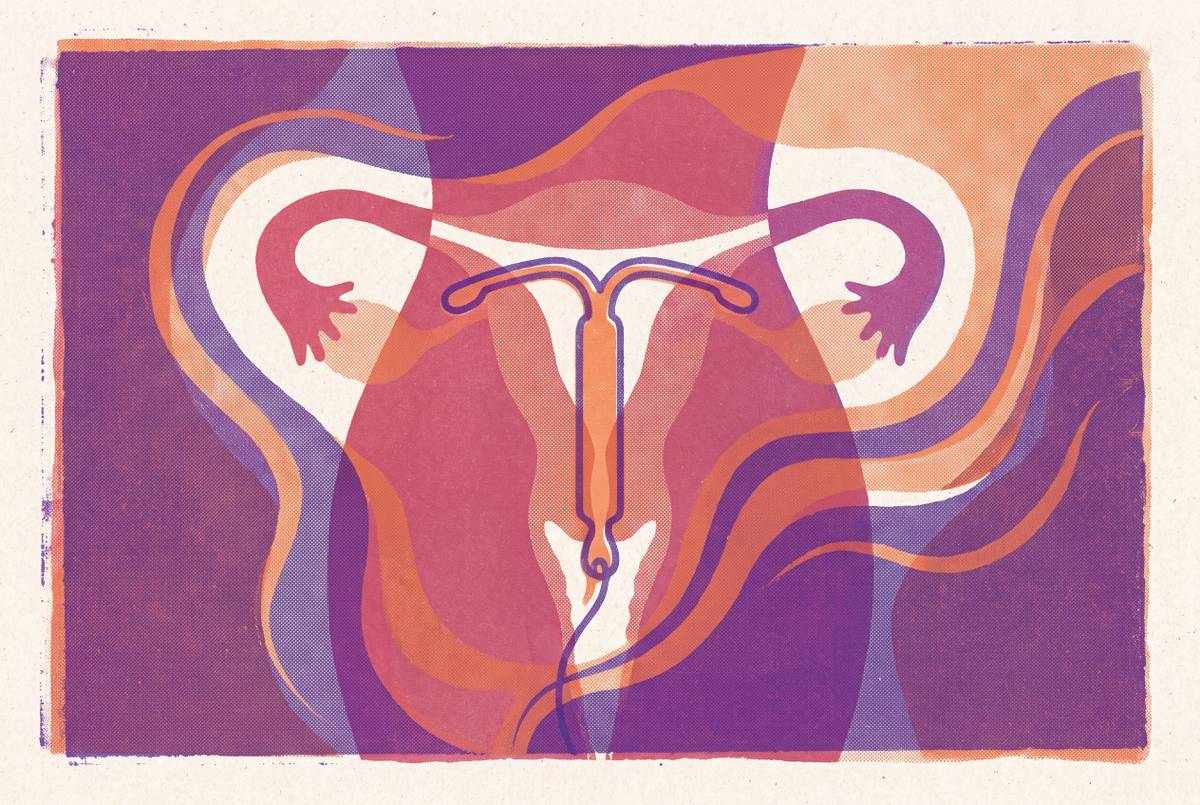
Low Progesterone Symptoms in Perimenopause
Why progesterone falls first in perimenopause and what that does to your body.
Progesterone is usually the first hormone to slip in perimenopause, and that one fact explains a surprising amount of confusion about what's happening to a woman's body in her late 30s and early 40s. This piece walks through why progesterone falls first, what that decline feels like day to day, why it gets missed or misdiagnosed for years at a stretch, and what a woman can actually do to build real evidence about her own transition instead of guessing at it.
Progesterone is the first hormone to fall in perimenopause because ovulatory cycles begin to shorten and become irregular years before estrogen shows any sustained decline, and each ovulation produces less progesterone than it once did. That drop removes the main brake on the uterine lining estrogen builds each month, which is why the earliest daily signals are typically heavier or more erratic bleeding, spotting between periods, and shorter cycles. Beyond the reproductive system, progesterone converts in brain tissue to allopregnanolone, a compound that amplifies the brain's primary calming neurotransmitter at the GABA-A receptor; as progesterone falls, allopregnanolone falls with it, and the result is fragmented sleep, a lower threshold for anxiety, and a mood instability that spreads across the whole cycle rather than clustering in the premenstrual days the way classic PMS does. Fatigue that doesn't lift with more sleep rounds out the pattern, and these symptoms arrive as a cluster connected by one upstream cause, even though they almost always get treated as separate problems by separate specialists.
Why does progesterone drop first in perimenopause and what symptoms does that cause day to day?
Start with the cycle, because that's usually where the first sign shows up. Shorter cycles. Spotting between periods. Bleeding that's suddenly heavier or lighter than it used to be. These changes get chalked up to stress, or to "just getting older," when they're often the most direct hormonal signal a woman has access to. Progesterone's job in the second half of the cycle is to stabilize the uterine lining that estrogen builds up in the first half; when there isn't enough of it around to oppose that estrogen effect, the lining grows thicker than it should, and bleeding gets heavier or drags on longer than it used to.
Sleep tells a similar story, though it's easy to miss if you're thinking about insomnia in the generic sense. This isn't just "bad sleep." Trouble falling asleep specifically, waking multiple times overnight, and surfacing in the morning feeling like the sleep never did its job — that's the actual pattern. It maps onto a specific brain mechanism rather than garden-variety sleep hygiene failure, which the next section gets into.
Then there's the anxiety, and this is where a lot of women get stuck without an explanation for what's happening to them. It tends to feel like a baseline hum, an edginess that doesn't track with anything happening externally, rather than the anxiety tied to a hard week at work or a difficult conversation with a partner. Mood instability shows up too, but here's a distinction worth sitting with: classic PMS clusters mood symptoms in the days right before a period. Low progesterone in perimenopause tends to spread that instability across the whole cycle. That's a meaningful clinical difference, and it's one most women have never been told to look for.
Add in fatigue that doesn't lift no matter how much sleep gets logged, and you've got a cluster: cycle changes, disrupted sleep, free-floating anxiety, mood swings untethered from the usual premenstrual timing, persistent tiredness. These symptoms rarely get treated as a cluster, though. A woman brings her heavy bleeding to a gynecologist, her sleep to a specialist, her anxiety to a therapist, and each provider treats their piece in isolation. Nobody's wrong, exactly, but nobody's looking at the whole picture either, because seeing the whole picture requires knowing that progesterone connects all four.
How progesterone works in the brain, and why its loss disrupts sleep and mood so specifically
Progesterone doesn't stay in its lane. Most people think of it strictly as a reproductive hormone, something the ovaries make to support pregnancy, and that's true as far as it goes. It's also a neurosteroid: the brain makes it and responds to it independently of whatever the ovaries are doing that month. That distinction matters once you understand what happens to progesterone's metabolite once it gets converted in brain tissue.
That metabolite is allopregnanolone, one of the most potent naturally occurring positive allosteric modulators of the GABA-A receptor, the brain's main inhibitory channel. Worth slowing down on that mechanism rather than taking it on faith. A benzodiazepine binds to the receptor and triggers a response on its own; allopregnanolone works differently, making GABA (the brain's natural calming neurotransmitter) work harder at that same receptor. Think amplifier, not switch. The practical result is a nervous system that settles into sleep more easily and tolerates stress without tipping into anxiety.
So what happens when progesterone falls? Allopregnanolone falls with it, and the brain's inhibitory tone drops along with it. Sleep fragments, the threshold for anxiety drops, and smaller stressors start producing bigger reactions. Mood loses a stabilizer it had been leaning on the whole time, without anyone realizing it was even there.
None of this is a theoretical model pieced together from indirect evidence, either. In 2023, zuranolone, a synthetic neurosteroid built to mimic allopregnanolone, was approved as the first oral rapid-acting treatment for postpartum depression. That approval matters here for a reason that goes beyond postpartum care: it's direct clinical validation that the GABA-progesterone pathway is real, measurable, and treatable.
Estrogen complicates the picture further, since progesterone isn't acting alone. Estrogen regulates serotonin transporters and dopamine activity, so as estrogen becomes more erratic in early perimenopause (this starts well before any permanent decline), mood regulation loses a second stabilizing system at roughly the same moment it loses the first. Put those together and what you get is a measurable neurochemical shift, two separate hormonal systems destabilizing on overlapping timelines.
Why these symptoms get misattributed — and how long that misattribution typically lasts
Here's a number worth sitting with: perimenopause produces symptoms in 80 to 90% of women who go through it, and it's still chronically under-diagnosed at the clinical level. That gap, between how common the symptoms are and how rarely they get correctly named, is the whole problem in miniature.
Why does the gap exist? Look at the symptom list again: anxiety, sleep disruption, cycle irregularity, mood instability, fatigue. Every one of those maps cleanly onto some other diagnosis. Generalized anxiety disorder. Thyroid dysfunction. Depression. Burnout. Iron-deficiency anemia from the heavy bleeding itself. A clinician seeing these symptoms in isolation, with no framework connecting them to hormonal change, has a dozen reasonable places to look before landing on perimenopause. Most of those alternative diagnoses aren't wrong exactly; they're incomplete, or they're treating a downstream effect while the upstream cause sits untouched.
Making this harder: current guidance actively discourages hormonal testing in some cases. NICE guidance advises against using lab tests to diagnose perimenopause in women 45 and older. The reasoning is sound in principle, since hormone levels fluctuate so much during the transition that a single snapshot can mislead as easily as it clarifies. The practical effect, though, is that a woman in early perimenopause may get no hormonal workup at all if her clinician follows that protocol to the letter, particularly if the only test on offer is FSH, which does not reliably capture the full hormonal picture during early perimenopause.
So what happens next? A woman gets treated for anxiety. Or a sleep disorder. Or depression. Perimenopause itself lasts an average of 4 years, with a documented range of 2 to 10, so the window during which a misattributed diagnosis can sit unchallenged isn't short. Years, potentially, spent on the wrong treatment plan while the actual driver goes unaddressed the entire time. That's the real cost, and it isn't measured in inconvenience; it's measured in years of a woman's life spent solving the wrong problem.
The difference between low progesterone levels and progesterone resistance — a distinction that changes how symptoms are interpreted

One might argue the fix is simple: test progesterone, find out if it's low, treat accordingly. But a normal-looking progesterone number doesn't always mean progesterone is doing its job, and that raises an uncomfortable question about what these tests are actually measuring.
This is the distinction between low progesterone and progesterone resistance, and it changes the entire interpretation of a lab result. Low progesterone means exactly what it sounds like: the serum level is genuinely reduced. Progesterone resistance describes something stranger, a state where the hormone is present, sometimes at levels that look entirely adequate on paper, but the receptor response is blunted, often against a backdrop of inflammation. The hormone shows up; the signal just doesn't land the way it should. A woman can have a "normal" progesterone reading and still carry the full symptom burden of functional progesterone insufficiency, because the number on the page and the experience in her body aren't measuring the same thing.
Timing complicates this further. Progesterone only means something if it's drawn at the right point in the cycle, specifically the mid-luteal phase, roughly seven days after ovulation. Draw blood at the wrong time, even in a woman with a textbook regular cycle, and you'll get a misleadingly low number that has nothing to do with an actual hormonal problem. Now think about what happens once cycles start turning irregular, which is exactly what's happening in perimenopause: pinning down "seven days after ovulation" gets genuinely hard when ovulation itself stops being predictable. That's not a small technical footnote; it's an argument for testing more than once, rather than trusting a single draw to represent the whole picture.
So what does a progesterone number actually tell you on its own, stripped of context? Less than it appears to. You need to know when in the cycle the blood was drawn. You need the estrogen level from that same window, since the ratio between the two matters as much as either value alone. And you need the symptom picture reported alongside it. A number without that context is a fragment, not a diagnosis.
What a useful hormone panel looks like for a woman experiencing these symptoms

So what should an actual panel include? FSH alone is still the most commonly ordered marker for exactly this kind of complaint, despite its limits. It can sit inside a normal range during early perimenopause even as progesterone has already started sliding, and it fluctuates enough within a single cycle, let alone across weeks, that one reading rarely settles anything on its own.
A more useful approach pairs progesterone (ideally timed to the luteal phase, or tracked across more than one cycle) with estradiol and FSH together, so the ratio and the trajectory across all three can be read as a set instead of in isolation. Estradiol deserves particular attention here, because of how oddly it behaves early in the transition: it can swing high before it ever trends low, which means a single reading that comes back normal, or even elevated, doesn't rule perimenopause out. It might just mean the blood happened to catch one of estrogen's higher swings.
Thyroid function belongs in that same initial workup, specifically TSH and free T3/T4, because hypothyroidism produces a symptom picture that overlaps heavily with low progesterone: fatigue, mood changes, sleep disruption. Ruling it out, or flagging it as a contributing factor, is part of getting the full picture. And if heavy bleeding is part of the presentation, a baseline complete blood count matters too, since iron-deficiency anemia is a plausible downstream consequence of blood loss that's gone on for a while unaddressed.
The real point of testing is pattern recognition over time, not a one-time verdict. A panel drawn once is a single data point, nothing more. The same panel, repeated across a few cycles or a few months, starts to show whether progesterone is consistently low or just caught on an off day, whether estradiol is genuinely swinging wildly or was simply unlucky in its timing, whether FSH is beginning a sustained climb rather than a random blip. A clinician still has to read those numbers against cycle day, symptom history, and prior values, because a lab value stripped of that context can't reliably tell early perimenopause apart from a luteal phase defect, from anovulation, from something else altogether.
How tracking hormone levels over time changes what a woman can know about her own transition
Perimenopause spans about 4 years on average, and the late transition phase alone can run 1 to 3 years within that window. The hormonal picture at month one of the transition and the hormonal picture two years later are not the same picture, even though both get filed under the same umbrella term.
A single test captures a moment. Repeated testing captures a trajectory, and trajectory is what actually answers the questions that matter here: is progesterone declining steadily, or holding roughly stable with the occasional dip? Is estradiol becoming progressively more erratic? Has FSH started a sustained climb, as opposed to one elevated reading that could just be noise? These distinctions separate early perimenopause from mid-transition from late transition, and that staging isn't academic. It shapes real decisions: about contraception, about whether symptoms warrant treatment now versus watchful waiting, about when bone health monitoring becomes relevant as estrogen's protective effect wanes.
This kind of longitudinal view also changes what happens in the exam room. A woman who can describe her symptoms is having one kind of conversation with her doctor; a woman who can show a progesterone trend across 18 months is having a different conversation entirely, because she's brought evidence instead of an impression. That shift, from describing to demonstrating, isn't a small one.
Worth noting too: the clinical framework used to stage the menopausal transition, STRAW+10, is itself built on pattern over time rather than a single measurement. It classifies where a woman sits in the transition based on patterns of cycle change observed across months, not a snapshot. So there's already a real logic baked into the clinical gold standard that favors serial data over one-off testing. The gap is that most women never get access to that kind of repeated measurement, because the standard visit produces one test, one moment, one number, and then everyone moves on.
For a woman who started perimenopause in her late 30s, years can pass before the transition becomes obvious to a clinician relying on markers checked once and filed away. Serial hormone data doesn't skip that waiting period, but it fills the waiting with something concrete instead of something vague. Knowing that progesterone has run low and steady for two years while estradiol keeps swinging is a specific, personal record of what one body has actually been doing, and that's a different kind of knowledge than any generic wellness advice was ever going to offer.